Food and Drink Labels That Survive the Fridge: A Buyer's Guide
A label that looks great on your kitchen counter can turn to mush the second it hits a cold jar or a steamy dishwasher cycle. If you're shipping salsa, cold brew, kombucha, jam, or anything that lives in a fridge or freezer, the label material matters more than the design.
This guide covers what actually holds up, what doesn't, and how to lay out ingredient panels so they're readable and compliant-ready. No fluff, just what you need before you hit order.
Why fridge labels fail (and it's not the ink)
Most label failures aren't a print quality problem, they're a material problem. Paper labels absorb moisture from condensation and turn wavy, bubbly, or straight-up peel off within days in a cold, humid fridge. Add oil from a sauce jar or grease from a deli container and paper gets translucent and stained fast.
Condensation is the real enemy. Anything pulled straight from a fridge or freezer sweats, and that moisture sits right at the label edge where adhesive is weakest. If your product touches ice, brine, or steam, plan for that from the start, not after your first batch of labels curls up in a customer's fridge.
- Condensation attacks adhesion at the edges first
- Oil and grease make uncoated paper transparent and stained
- Freezer frost can crack labels that aren't rated for cold
Roll labels, clear roll labels, or paper labels: which one for what
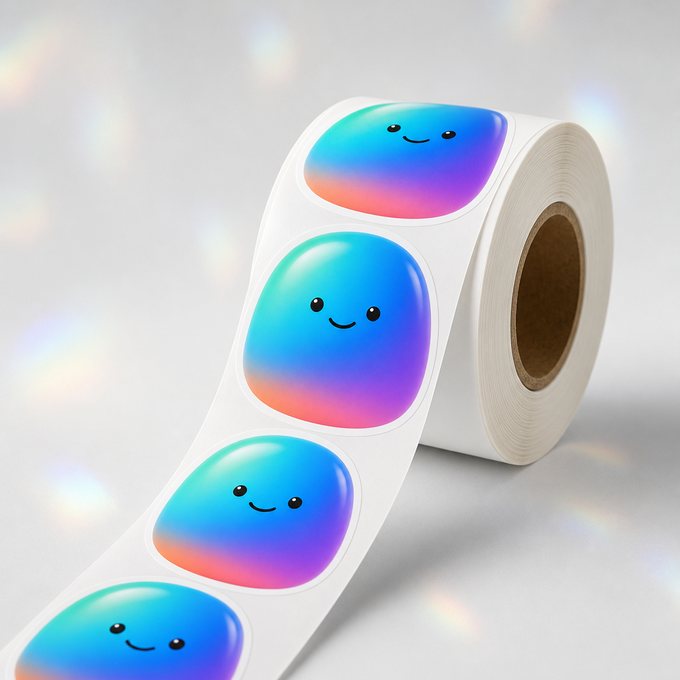
For anything refrigerated, frozen, or prone to condensation, waterproof vinyl roll labels are the safe default. They're dishwasher-safe, resist oil and moisture, and won't fade or peel in a cold, wet environment. This is what most CPG food and drink brands should be ordering.
Clear roll labels are the move when you want a no-label look, showing off the product through the jar while your logo and text float on top. They're still waterproof vinyl, so they hold up in the fridge just as well, but they read as more premium on glass jars, bottles, and clear tubs.
Paper labels have their place: dry goods, spice jars stored in a cabinet, gift packaging, or anything that never sees moisture. They're not the right call for fridge or freezer products, full stop.
- Roll labels (white vinyl): best all-around choice for fridge and freezer items
- Clear roll labels: waterproof vinyl, transparent finish for a premium look on glass
- Paper labels: fine for dry, room-temperature, non-refrigerated products only
Waterproof vs. water-resistant: the difference that actually matters
'Water-resistant' often just means it survives a light splash. 'Waterproof' should mean full submersion, sustained condensation, and repeated handling with wet hands, without lifting, smudging, or fading. Our vinyl roll labels and clear roll labels are waterproof, oil-resistant, and dishwasher-safe, which covers the three things that actually wreck food and drink labels: fridge sweat, sauce drips, and a run through the dishwasher on a reusable bottle.
If a label vendor doesn't specify dishwasher-safe or freezer-safe, assume it isn't. Ask before you print 500 of them.
Freezer and dishwasher realities
Freezer storage is generally kinder to labels than the fridge because there's less liquid condensation once things are fully frozen solid, but the freeze-thaw cycle (in and out for use) is where labels get stressed. Vinyl handles this fine. Paper does not, it'll bubble and lift within a few cycles.
Dishwasher-safe is a real, testable claim for our vinyl labels: they can handle hot water, detergent, and the mechanical action of a wash cycle without lifting corners or washing out text. That said, no label is designed for years of daily dishwasher cycles, so for reusable bottles meant to be relabeled, plan on periodic replacement rather than a lifetime guarantee.
- Freezer: vinyl handles freeze-thaw cycles, paper bubbles and lifts
- Dishwasher: waterproof vinyl survives a wash cycle, don't expect years of daily washing from any label
- Fridge: condensation is the top failure point, vinyl is the safer default
Ingredient panel layout basics
Once the material's sorted, layout is what keeps you out of trouble and keeps customers actually reading the label. Set body text no smaller than 6 to 7pt for ingredient lists and allergen statements, and print everything at 300 DPI so small text doesn't blur or pixelate, this matters even more on a glossy or clear label where light reflects off the surface.
Leave a clean margin around the ingredient panel, group allergens in bold or a clearly separated line, and keep your net weight and any required statements in a consistent spot across your SKU lineup so a shelf full of your products looks intentional, not improvised. We're not a compliance service, but a legible, well-structured label makes it a lot easier for you to check your own regulatory boxes before printing.
- 300 DPI minimum for crisp small text and fine ingredient lists
- 6 to 7pt minimum for body copy, larger for allergen statements
- Keep layout consistent across SKUs for a professional shelf presence
Sizes, pricing, and how ordering actually works
Custom die-cut roll labels start around $55 USD (about 73 CAD) for a run of 50 at 3 inches, with per-unit cost dropping as quantities go up, which matters once you're labeling a full case run rather than a test batch. Every order gets a free digital proof before anything goes to print, so you catch a font size issue or a missing allergen line before it's on 500 jars, not after.
Shipping is fast across the US and Canada, and it's free on orders over $26 USD (about 35 CAD). If you're testing a new product line, start with a small roll of 50 to check adhesion and legibility on your actual container before committing to a bigger run.
- Roll labels start at ~$55 USD (73 CAD) for 50 at 3in, die-cut to your shape
- Free proof before printing on every order
- Free shipping on every order, fast across the US and Canada
- Waterproof vinyl roll labels are the right default for anything refrigerated or frozen
- Paper labels are fine for dry goods only, not fridge or freezer products
- Clear roll labels give you a premium, no-label look while staying fully waterproof
- Dishwasher-safe vinyl handles wash cycles, but plan on replacing labels on frequently reused bottles
- Print at 300 DPI with 6 to 7pt minimum text so ingredient panels stay legible
- A free proof catches layout and allergen issues before you commit to a full print run
Frequently asked questions
Are paper labels ever okay for food products?
Yes, for dry goods stored at room temperature, like spice jars, coffee bags, or gift packaging that never touches moisture. For anything refrigerated or frozen, go with waterproof vinyl instead.
Do I need waterproof labels if my product isn't refrigerated?
Not necessarily. If your product sits on a shelf and stays dry, paper labels can work and cost less. Waterproof vinyl becomes important once condensation, oil, or handling with wet hands enters the picture.
Will vinyl labels survive a chest freezer long-term?
Yes, vinyl roll labels handle freeze-thaw cycles well since they don't absorb moisture the way paper does. Just make sure the label was fully waterproof to begin with, not just water-resistant.
Can these labels go through a dishwasher?
Our vinyl roll labels are dishwasher-safe and hold up to hot water and detergent for a wash cycle or two. For bottles washed daily over months, expect to relabel periodically rather than treating it as permanent.
What print resolution do you use, and does it matter for small text?
We print at 300 DPI, which keeps ingredient lists and allergen statements sharp even at small sizes. Lower resolution shows up as blurry or pixelated text, especially on glossy or clear stock.
Do you check my label for FDA or food labeling compliance?
We're a printer, not a compliance service, so we don't review your content for regulatory accuracy. We do send a free proof before printing so you can double check layout, legibility, and required statements yourself.
Ready to print?
Upload your artwork, grab a free proof, and get fridge-ready labels on their way in a few clicks.
Start your order →